Tobyhanna
Most eastbound
trains with helpers stopped at Tobyhanna to cut off their helpers. From Crossing
to Tobyhanna station proper the track is on a slight downgrade to return to
a comfortable operating height. The grade levels at the crossovers, however,
to make cutting the helpers off a little easier. The photo below shows the
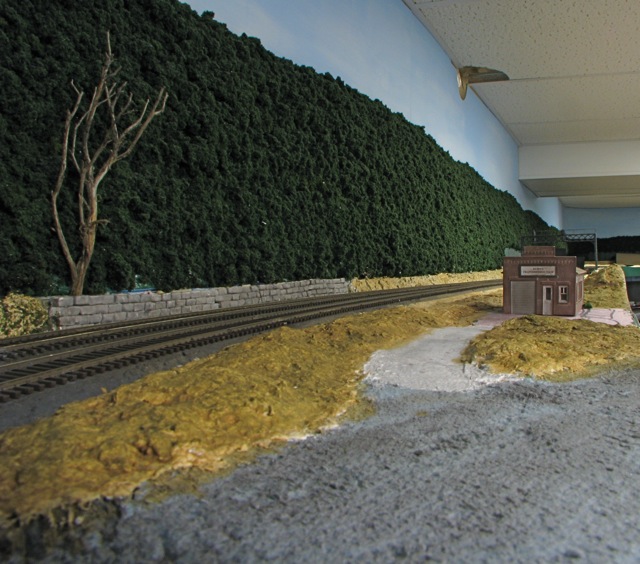
crossovers in the middle distance and the Army Depot switch in the distance.
As on the prototype, the station is to the right around the bend. Normally,
eastbound trains stopped here and cut off the helpers, which would have been
placed ahead of the caboose. The caboose was placed back on the train, and
the helpers ran light back to Scranton:
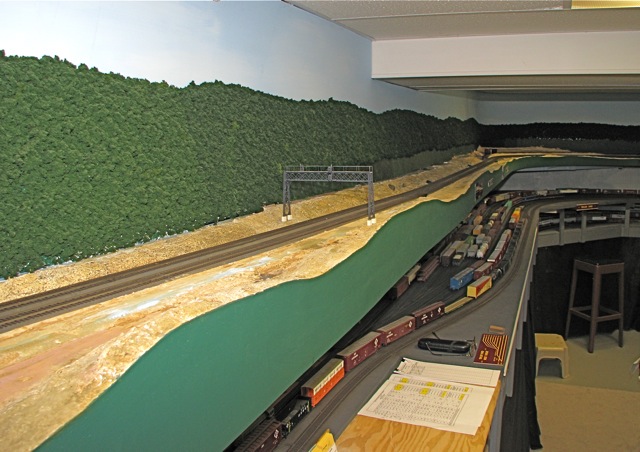
In this shot from June 2009, an eastbound train with helpers is just arriving
at Tobyhanna, and will pull
forward until the helpers are about where the lead units are now, and then
will cut off the helpers and caboose, the helpers will run around the caboose
and place it back on the train. They will then return light to Scranton:
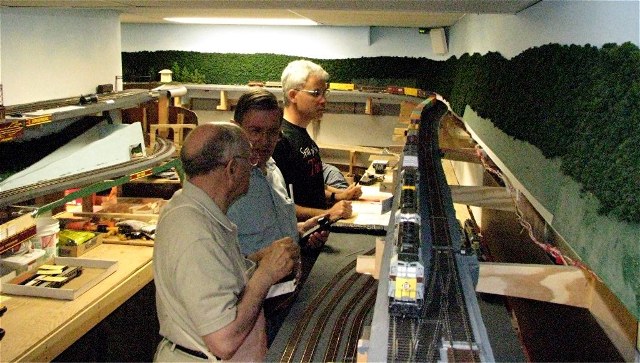
And here are the helpers just west of Elmhurst, drifting downhill:
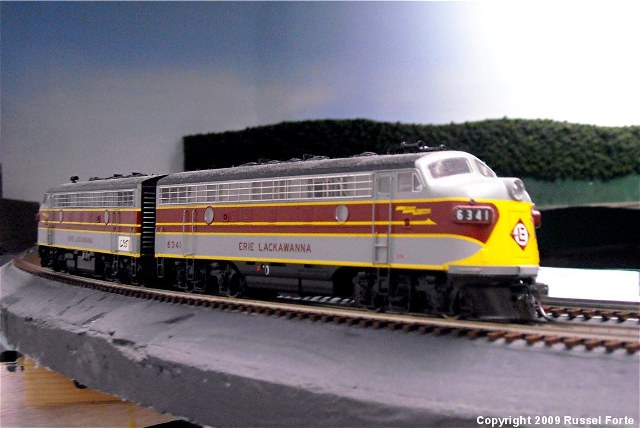
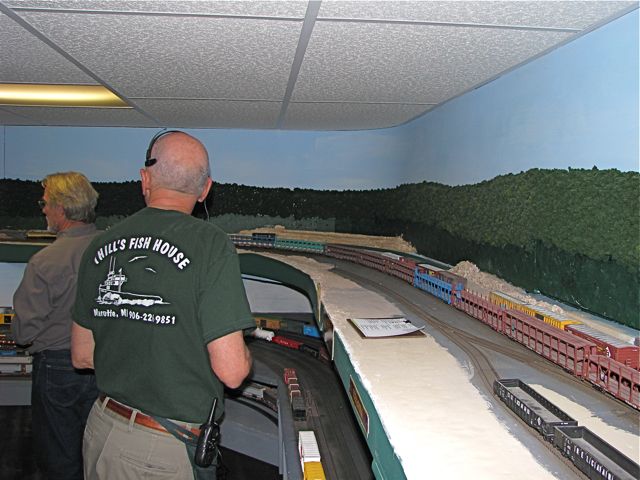
During operations, Tobyhanna can get busy beyond the helper operations. In
the photos below, CS-9 is working the Army Depot and Station track while Port-Smt
passes on Track 2, running against the current of traffic:
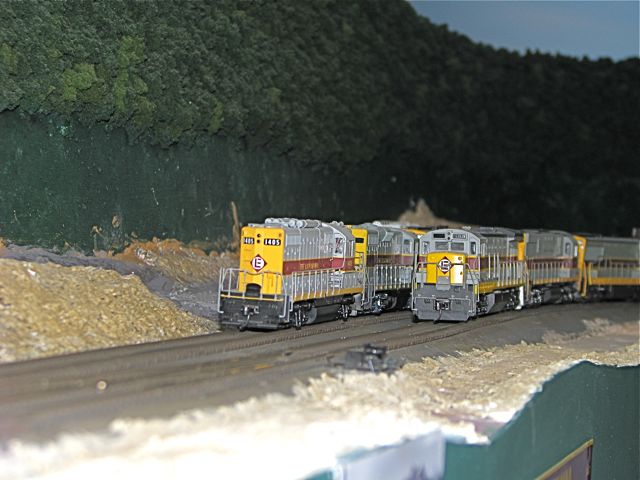
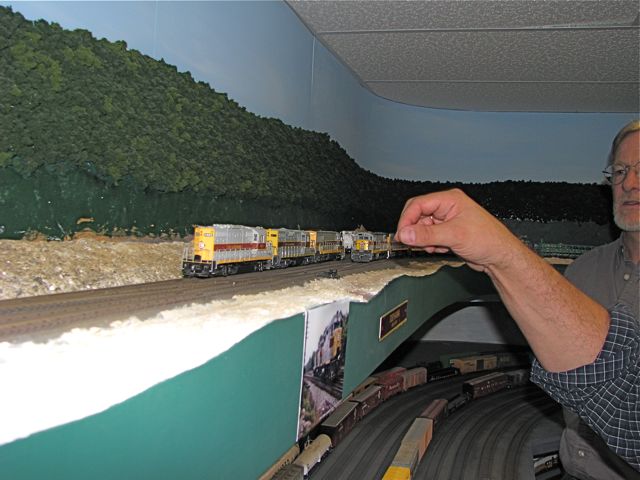
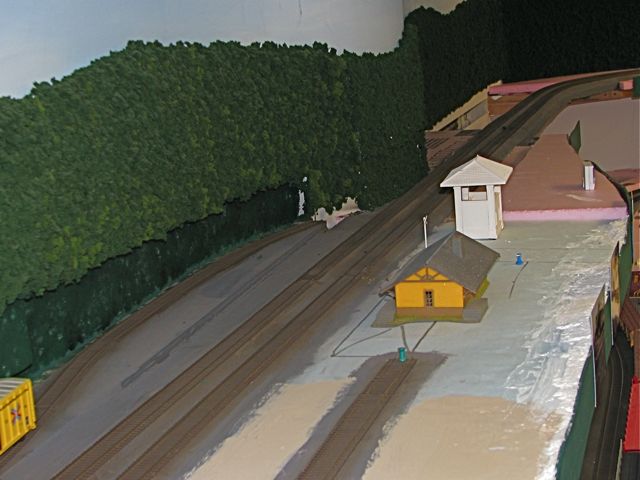
And finally, an overview of the Tobyhanna station area (the station is a stand-in,
and the tower is a partially-assembled plaster kit by The Hobby Gallery/Crow
River Products). Pictured is the tower, another of those wonderful Lackawanna
concrete towers, the station, and two sidings which, in 1975, saw some traffic.
The "Station Track" was used for loading pulpwood into gondolas,
and the west leg of the wye -- used during steam days to turn the helpers
-- was used to unload utility poles from bulkhead flatcars. The west leg of
the wye is represented by the to-be-hidden siding on the left.