Located in the Pocono Mountains of northeastern Pennsylvania, Scranton was once the heart of Anthracite Country, the primary source of the hard coal. A clean-burning fuel, Anthracite was a popular fuel for heating in the early 20th century and generated a lot of railroad traffic, primarily from the mines along the branches in the Lackawanna Valley. At it's height the Delaware, Lackawanna, and Western operated five yards in Scranton to handle local freight, classify general freight, handle eastbound and westbound coal loads, and marshall empties for the mines. In addition to the coal traffic, the DL&W's main locomotive shops were located at Scranton. It was quite a busy location -- and that was just the DL&W; other railroads in town included the Delaware and Hudson, Central RR of NJ, and the Erie!
Unfortunately Anthracite's popularity didn't last, and dwindling demand combined with the Knox Mine disaster in 1956, which flooded many of the deep mines in the Lackawanna valley, cost the area much of that activity. To make matters worse, the DL&W merged with the Erie Railroad in 1960, and the combined road had two routes from the New York City Metropolitan Area to Binghamton, New York. In the early years of the merger, much of the remaining freight traffic was routed over the former Erie's Delaware Division. The Scranton Division still had a few trains, including the passenger trains, but the majority of the traffic went through Port Jervis. With the end of passenger trains in 1970, traffic on the division was sparse.
During the late 1960s and early 1970s
the financial climate in the northeast worsened and many of the railroads suffered.
The Erie Lackawanna was surviving, but cash was very tight, and the damage caused
by flooding from Hurricane Agnes forced the road to file for bankruptcy.
After the bankruptcy filing in 1972, the railroad began instituting even more
extensive cost-cutting measures than had been in place previously. One
such measure was to downgrade the Delware Division, remove one of the tracks
and the signals, and reroute traffic to the Scranton Division. By 1975
most of the traffic moved over the Scranton Division, with 11 symbol and 6 manifest
freights scheduled daily. Extras, Helper operations, and Bloomsburg Branch
trains nearly doubled the traffic in the area.
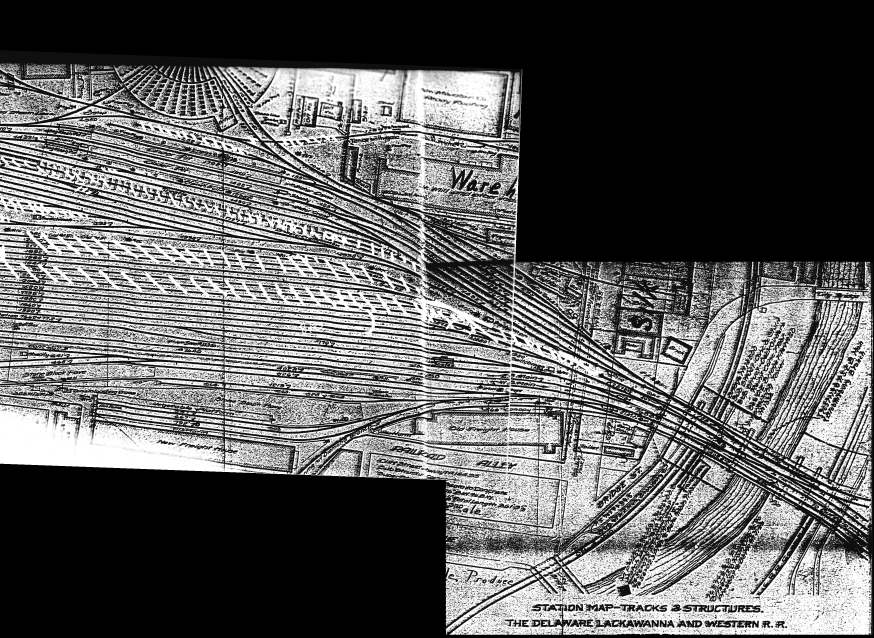
Plan of western portion of Scranton yards, from the 1918 ICC Valuation Map (click on image for larger version):
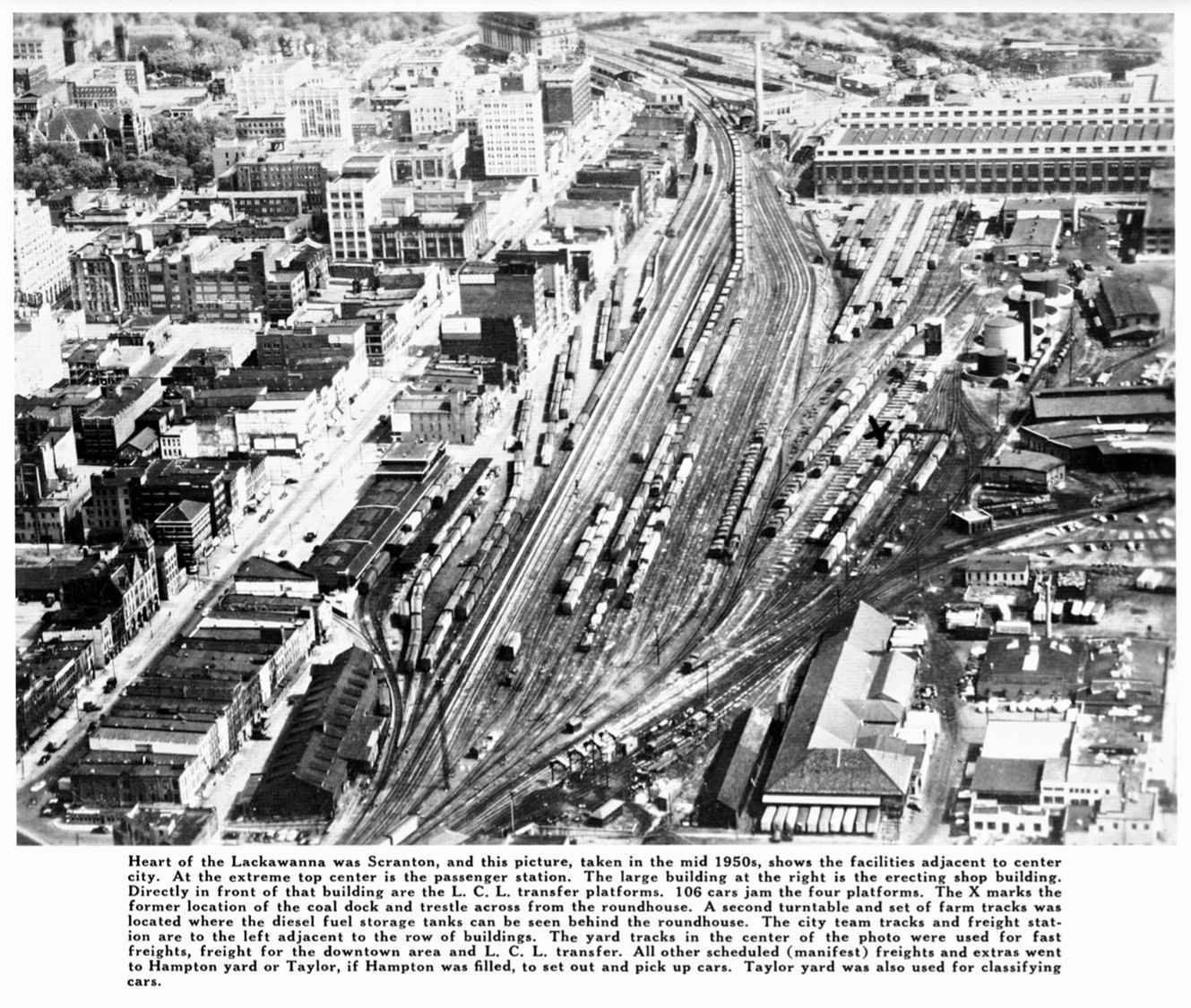
1950s aerial photo of downtown Scranton from Tom Tabor's definitive history of the DL&W (click on image for larger version):
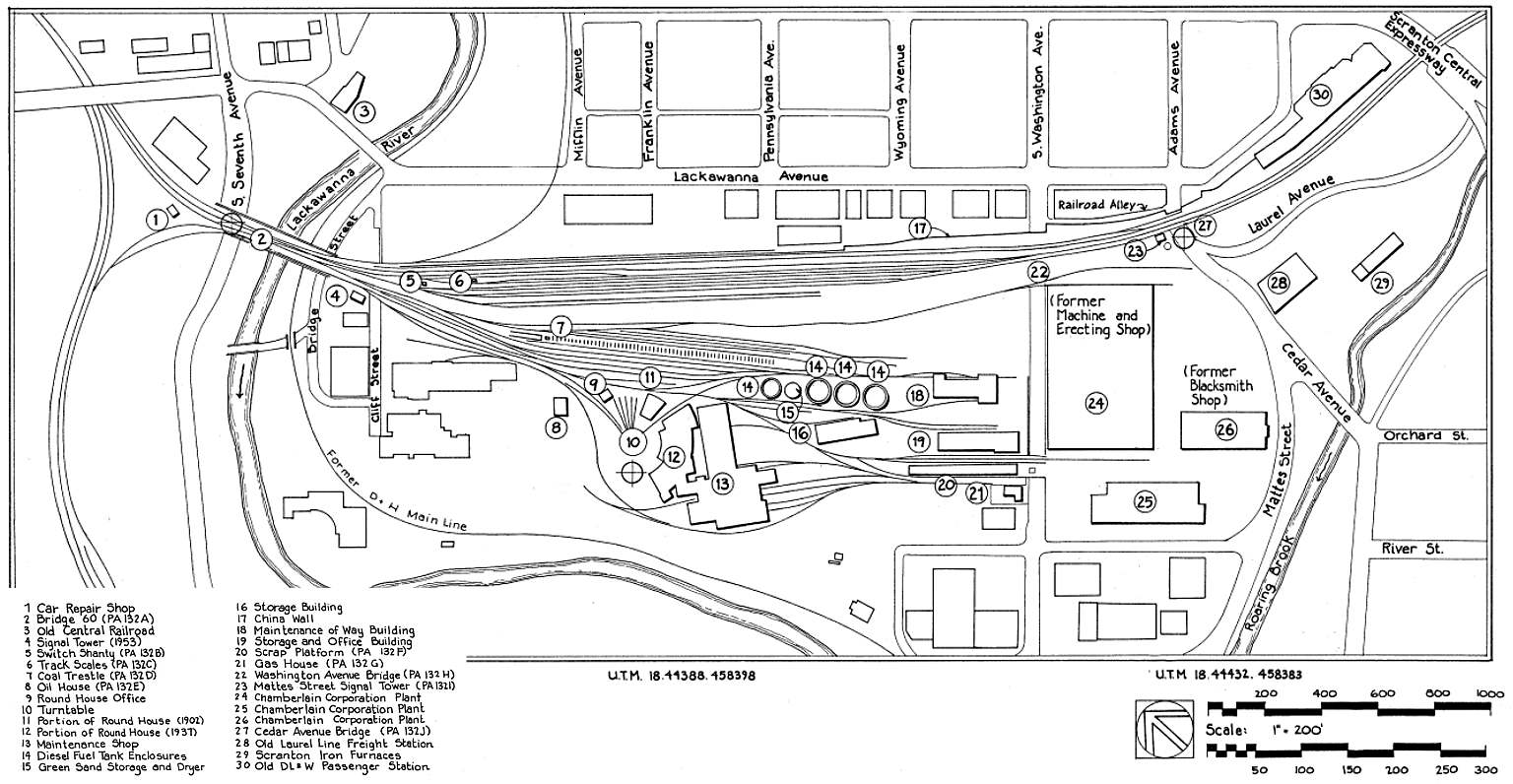
Plan of Scranton prepared by the National Park Service at the start of Steamtown (click on image for larger version):
Scranton Operations
Originally built when trains were smaller, in 1975 the downtown Scranton City Yard was a tight fit for most trains. It was very common for mainline trains being worked by the yard to extend past the passenger station. Helpers were added for both directions at this yard, and many through trains stopped to drop and pick up blocks of cars. Much of the classification of local traffic was done at the larger Taylor Yard a few miles down the Bloomsburg Branch, and transfer runs between the two yards were common.
Since the westward grade began just west of the yard, train length must have been a problem for westbound operations as well, but I haven't seen any pictures of trains blocking Bridge 60 or the Hyde wye.
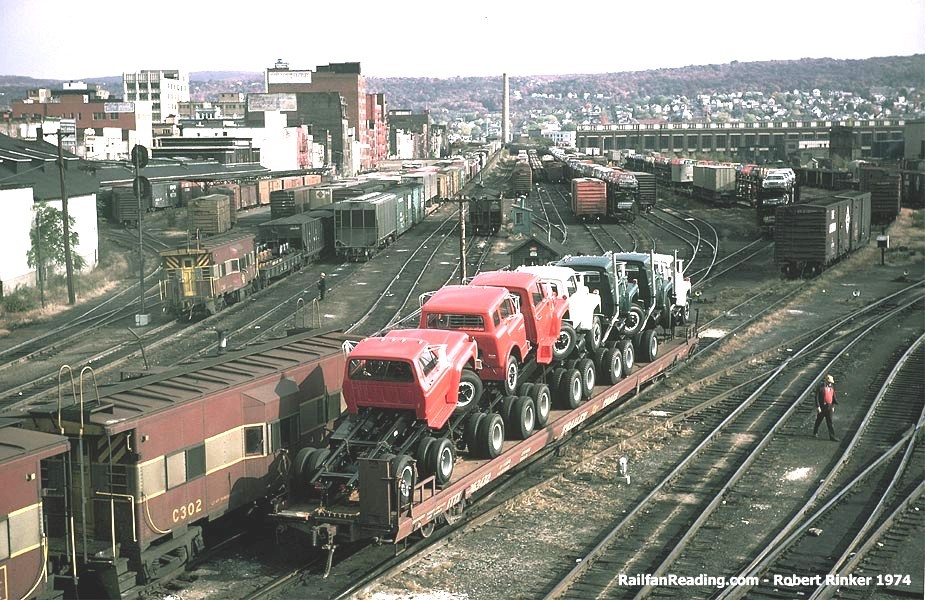
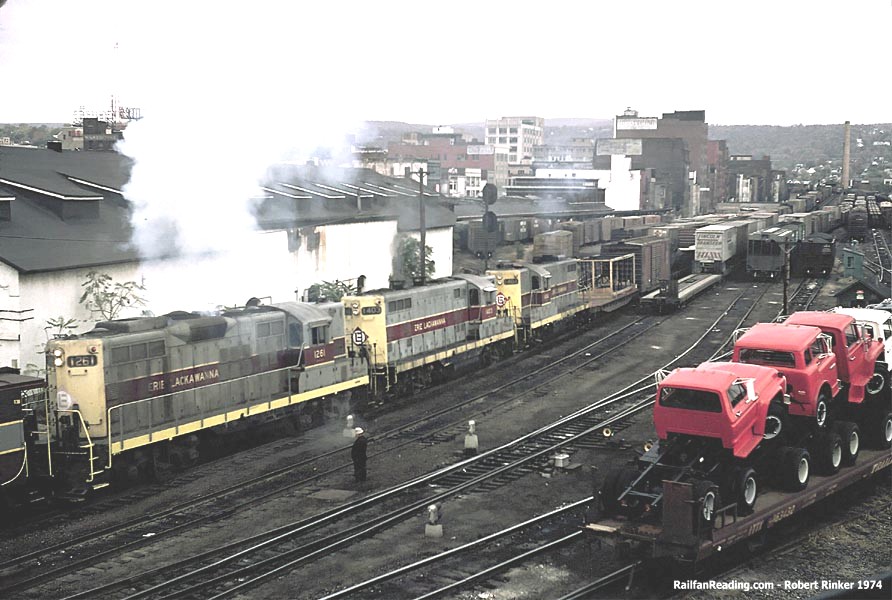
The photos below were taken by Robert Rinker and have been used here through the generous permission of his son, Jim Rinker, and by James Swipes and used through permission of Joseph Kashefski, as noted on the photo.
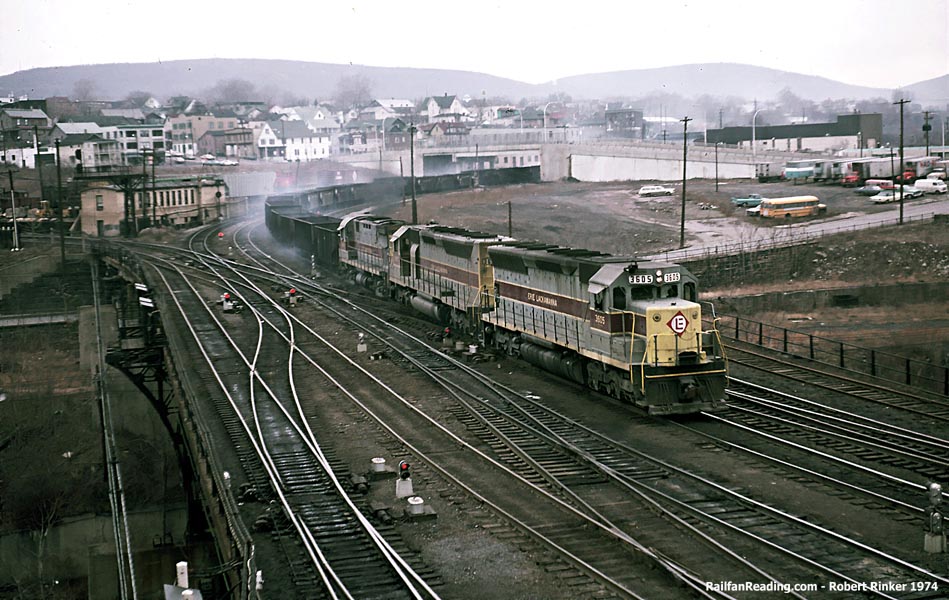
The western yard throat, seen from the balcony on the Bridge 60 tower:
Helpers preparing to assist a train up the hill:
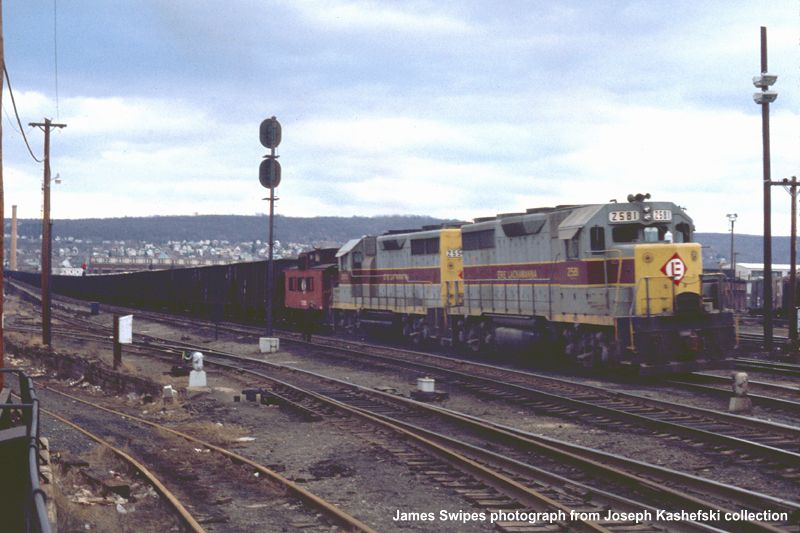
Another set of helpers, this time pushing a coal train with an 800-series caboose, built on the underframe from a steam locomotive tender:
Looking west from the tower, Bridge 60 is in the foreground and Hyde Wye is in the background. The grade west toward Binghamton starts just under the highway bridge in the background. The Bloomsburg Branch leaves the mainline on the lefthand leg of the wye, as viewed from this vantagepoint:
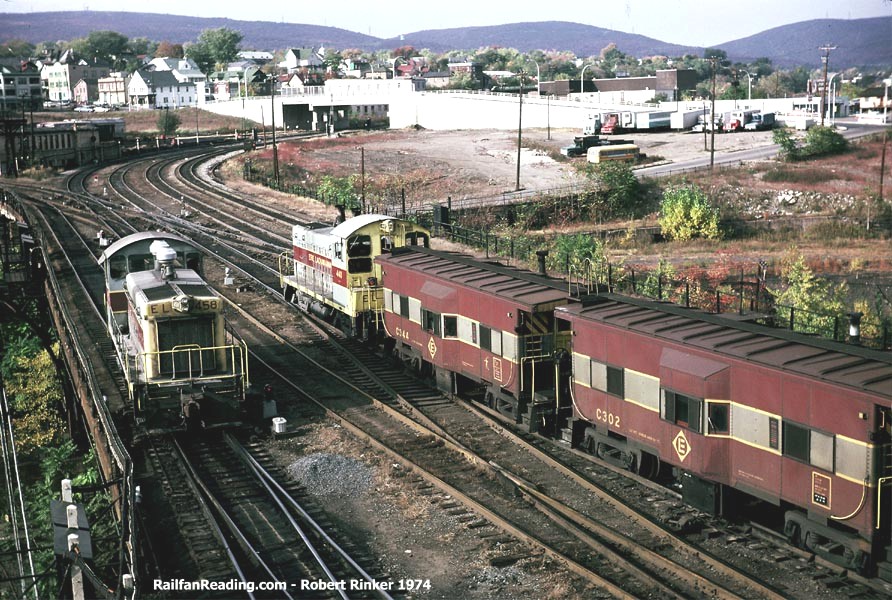
Another view of the Wye, this time from the northern side of Bridge 60 but in early ConRail years. The gantry signal on the Bloomsburg Branch is visible here, as is the building for the Repair-InPlace (RIP) facility in the center of the wye:
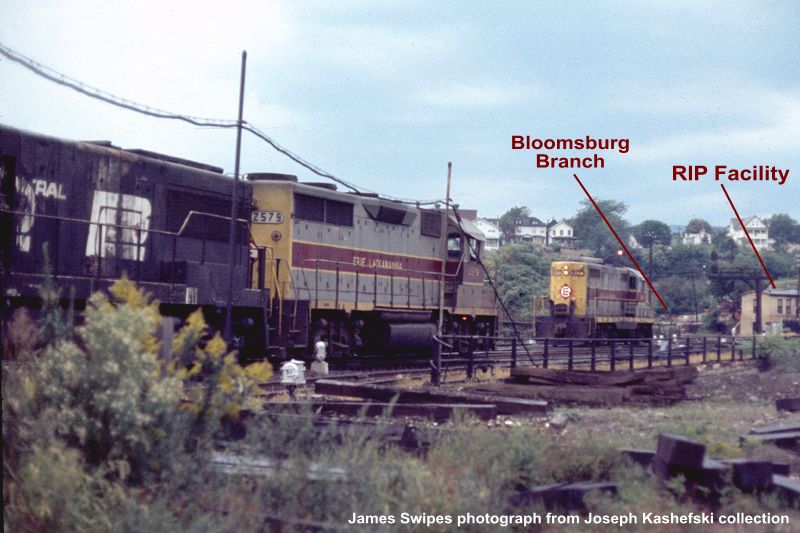
Another shot from Bridge 60 tower...a coal train is reaching the bottom of the grade. Check out the brake smoke! Clearly visible in this picture are the two Bloomsburg Branch tracks heading off to the left beyond the bridge.